Two countries, two very different tables
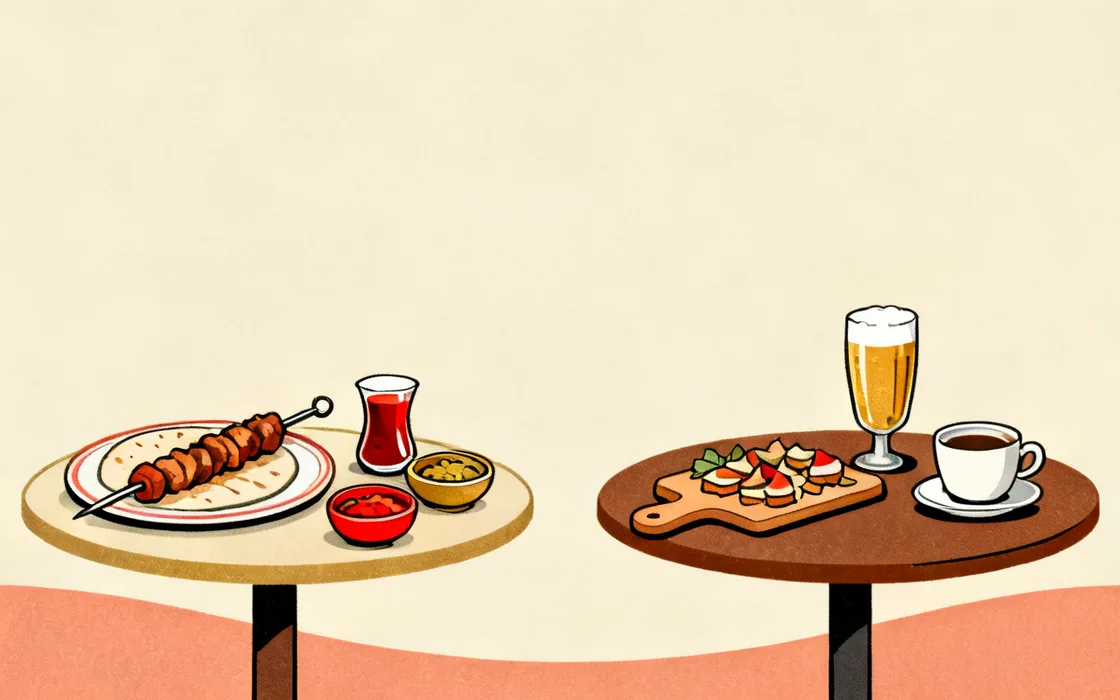
We currently cover 34,896 restaurants in Turkey and 14,107 in the Netherlands, and the contrast between them is one of the clearest things in our data. These are two genuinely different dining cultures, and the category counts show it plainly before you ever sit down.
Turkey: a food-first, grill-and-meze culture
Turkey's scene is built around food. Beyond the everyday diners that top every city, the defining categories are Turkish kitchens (4,472 listings nationally), steakhouses (2,551), Middle Eastern (2,481) and a deep döner and kebab tradition. Eating out means the grill house, the meze table, the long rakı dinner and an unusually serious breakfast and dessert culture. Bars exist but are not the centre of gravity; the meal is.
The Netherlands: a drink-led, cosmopolitan culture
The Dutch picture inverts that. The largest categories nationally are bars (3,191) and cafes (2,751), with pubs close behind. The social unit is the drink: the brown cafe, the terrace, the borrel. Food is excellent and deeply international, French, Italian, Asian and Mediterranean all feature, but it often happens around drinks rather than at a formal sit-down. The Dutch food hall, like Amsterdam's Foodhallen, is the contemporary expression of this: many kitchens, one room, a glass in hand.
The contrast in numbers
Because the two countries have different totals, the clearest way to compare them is by what share of each country's listings falls into a given category. Read that way, the divide is stark:
- Bars: 3,191 listings in the Netherlands against 1,825 in Turkey, which is about 23% of all Dutch listings versus roughly 5% of Turkish ones, the single biggest gap between the two.
- Cafes: high in both, 2,751 in the Netherlands and 4,407 in Turkey, but a larger share of the smaller Dutch total (around 20% versus 13%).
- Turkish kitchens: 4,472 in Turkey (nearly 13% of the country's listings) against just 103 in the Netherlands, the mirror image of the bar gap.
- Steakhouses and Middle Eastern: each over 2,400 listings in Turkey and around 7% of the total, against under 100 apiece in the Netherlands.
- Pubs: closer than you might expect in raw numbers (924 in Turkey, 865 in the Netherlands), but more than double the share of Dutch listings.
In one line: Turkey's listings concentrate in food categories, the Netherlands' in drink-led ones. That is the whole comparison, visible before you read a single menu.
What it means for where you eat
If you are eating in Turkey, lead with the food: pick a cuisine and a district and build the evening around the table. If you are eating in the Netherlands, lead with the room: pick a neighbourhood and a bar or cafe and let the food follow. Our city guides for Istanbul and Amsterdam are written with exactly that difference in mind.
A caveat about the data
One honest note on reading these category counts. Our data comes from open global place sources, and category tags are coarse: a venue can be tagged both Bar and Cafe, a kitchen that mainly serves food might still be labelled by its drinks licence, and "Diner" is a catch-all that tops every Turkish city. So the contrast we describe is a real and consistent signal, the Netherlands genuinely skews to bars and cafes while Turkey skews to food categories, but the exact numbers are directional rather than precise. We would rather show you the honest shape of the data than a falsely tidy figure.
The pattern also reflects coverage as it stands today. We are live in Turkey and the Netherlands and expanding country by country, so these two cultures are simply the first two we can compare in depth. As coverage grows, the comparisons will too.
This guide is e.restaurant's own editorial. Listing data comes from open global sources; where a restaurant is named, any star rating shown is Google's public rating, labelled and linked to the listing, and is kept separate from e.restaurant diner reviews. See our methodology for how we build and stand behind our listings.