One of the world's great food cultures
Turkish cuisine is one of the richest food traditions on earth, drawing on Central Asian, Anatolian, Middle Eastern and Mediterranean threads. It is built on charcoal-grilled meats, generous spreads of cold and hot meze, fresh vegetables, yoghurt, good bread and a deep culture of breakfast and of sweets. It is also genuinely regional: the food of the south-east is heavy on kebab, spice and pistachio, the Aegean leans on olive oil and herbs, and the Black Sea coast cooks with anchovy, corn and butter.
It is the single most common food cuisine across our Turkish coverage, with 4,472 listings tagged Turkish, and it sits behind a vast everyday culture of diners, soup houses and grill spots that may not carry the label but cook in the same tradition.
The signature dishes
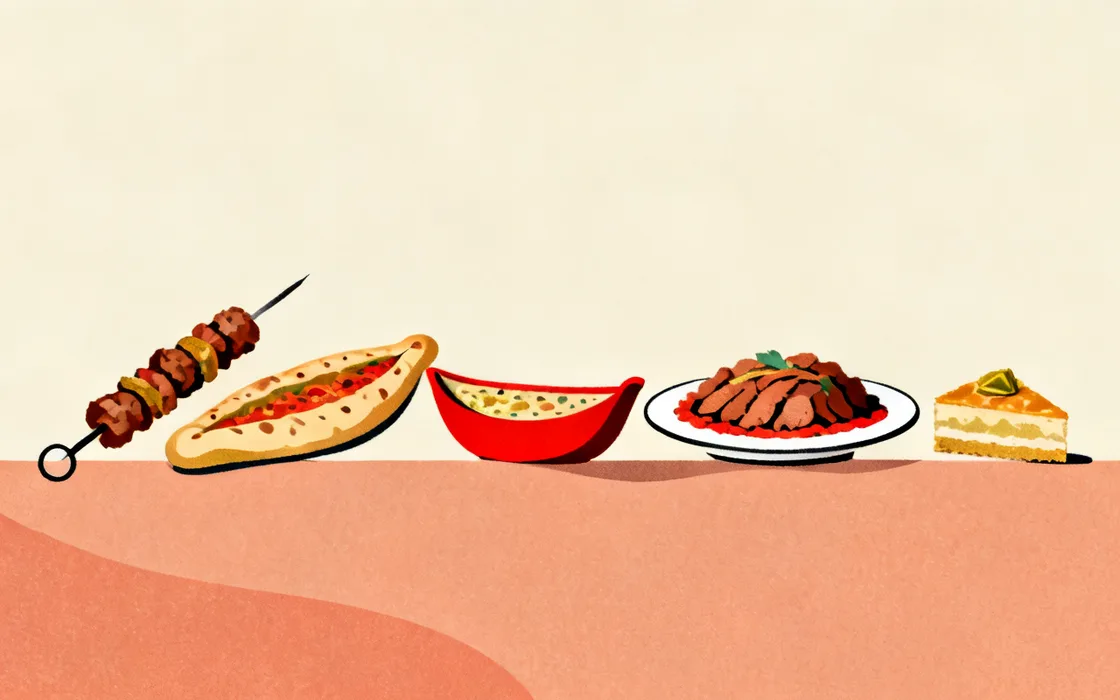
If you are new to the cuisine, these are the plates that define it:
- Kebab: grilled and skewered meats in dozens of regional forms, from Adana's spicy minced kebab and the cubed şiş to Urfa's milder version, the buttery beyti and the aubergine-layered patlıcan kebabı.
- Döner: seasoned meat roasted on a vertical spit and shaved thin, served in bread, as a wrap or as the plated iskender. It has a whole guide of its own below.
- Lahmacun and pide: thin flatbreads, one spread with spiced mince, the other boat-shaped and filled with cheese, egg or sucuk; the Black Sea bakes its pide long and butter-rich.
- Mantı: tiny hand-folded dumplings of spiced meat under garlic yoghurt and a drizzle of chilli butter, the dish Kayseri is famous for.
- Köfte: grilled or pan-fried meatballs, endlessly regional, from the Tekirdağ style to the İnegöl köfte of Bursa.
- Meze: the table of small cold and hot starters (haydari, ezme, dolma, fava, fried liver, çiğ köfte) that anchors a long rakı dinner.
- Pilav and dolma: rice and bulgur pilavs, and vegetables (peppers, vine leaves, courgettes) stuffed either with rice in olive oil or with spiced mince.
- Çorba: the restorative soups, lentil (mercimek), tripe (işkembe) and the yoghurt-and-mint yayla, eaten morning, noon and very late at night.
- Baklava and künefe: the syrup-soaked pastries that close the meal, best in the south-east but found everywhere; add şöbiyet, kadayıf and the milk puddings (sütlaç, kazandibi) for the full range.
Where to find it
Turkish is the single most common food cuisine in our data, with 4,472 listings nationally, and every city we cover has a deep Turkish backbone. Istanbul holds the most with 894 listings, followed by closely matched scenes in İzmir (305) and Ankara (303), and a substantial run in Bursa (191), the home of İskender and İnegöl köfte. For the grill-house experience, look to Ankara's Aspava tradition and the south-eastern kebab houses (Gaziantep, Adana, Urfa) where spice and pistachio run deepest; for the long meze-and-rakı table, head to a meyhane district like Kadıköy or Beyoğlu in Istanbul or Alsancak in İzmir; for the Aegean olive-oil side of the tradition, İzmir and the towns around it. Because the tradition is so broad, the cuisine filter on any city page is the fastest way to land on the exact register you want.
Top-rated Turkish restaurants
To make this concrete, here are some of the most-reviewed places tagged Turkish across our coverage, ordered by public Google review count. This is a popularity signal, not our endorsement: the star figure is Google's public rating, shown for reference and linked through to each listing, and kept entirely separate from e.restaurant diner reviews. They span several cities precisely because the cuisine does.
Tagged Turkish, ranked by public Google review count. Ratings are Google's, shown for reference.
- 1 Kadim Restaurant Bursa A large, long-running Turkish restaurant in Nilüfer, Bursa.
- 2 Guney Restaurant Beyoğlu, Istanbul A Karaköy fixture for grilled meat and meze on the European side.
- 3 Dimcayi Pinarbasi Restaurant Alanya, Antalya A riverside Turkish restaurant up the Dim Çayı valley near Alanya.
- 4 Şimşek Aspava Mithatpaşa Şube Çankaya, Ankara A branch of the Aspava grill-house format the capital is known for.
- 5 Florya Develi Restaurant Bakırköy, Istanbul A south-eastern kebab and baklava house on the Marmara coast.
How a meal is structured
A full Turkish meal does not arrive as a single plate. It builds. A meze table opens proceedings, a spread of small cold dishes meant for sharing and lingering over, often with bread and, in the evening, rakı. Hot starters follow, then the grill or the main, then fruit, then sweets with strong coffee or tea. Even a quick lunch carries echoes of this: a kebab arrives with salad, grilled peppers, bread and often a free starter, never just the meat alone.
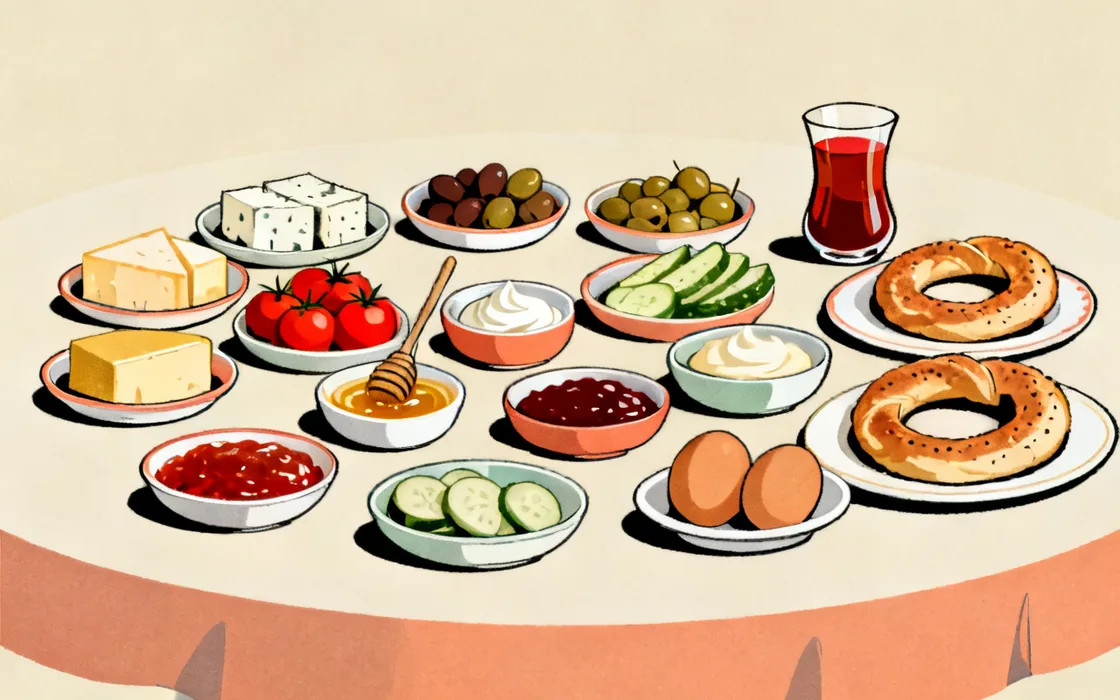
Breakfast deserves its own mention, because Turkey treats it as a genuine event rather than a rushed start. The classic serpme kahvaltı is a table covered in cheeses, olives, eggs, honey, jams, tomatoes, cucumbers, bread and endless tea, designed to be grazed over for an hour. The breakfast-and-brunch category is one of the fastest-growing in every city we cover for exactly this reason.
Reading a Turkish listing
Because the tradition is so broad, the category labels on our listings are a useful filter. A place tagged Turkish is a general restaurant; one tagged Steakhouse or Barbecue leans to grilled meat; Doner Kebab signals the spit; Soup points to the restorative bowls Turks eat morning and late at night; Breakfast & Brunch is self-explanatory. When you know the mood you are after, the cuisine filter on any city page narrows thousands of options down to a real, sorted list in one tap.
This guide is e.restaurant's own editorial. Listing data comes from open global sources; where a restaurant is named, any star rating shown is Google's public rating, labelled and linked to the listing, and is kept separate from e.restaurant diner reviews. See our methodology for how we build and stand behind our listings.